Best Dog Shock Collars

Dog shock collars are commonly used as a training tool to prevent dogs from acting negatively. They can be used to prevent bad behavior like barking or running around, but some people aren't sure whether they truly have a positive impact on the training of the dog.
Despite the constant debate going on within the industry, it seems to depend on the type of dog breed that you own. Some dog breeds respond more positively to a dog shock collar. We will be sure to talk a little bit more about this topic in the FAQ section of this post.
We are now going to shift our focus towards actual dog shock collars. There are always important factors to consider, especially when browsing for specific types of collars. Some of the more important factors that we commonly discuss include price, quality, effectiveness, and overall reputation. We are going to be heavily-relying on customer feedback for this review because of the importance of finding a high-quality collar that allows dogs to respond in a positive way to training exercises.
It is now finally time for us to begin our review section of this post. We will be analyzing five reputable dog shock collars that have propelled themselves to the top of the industry. Thousands of customers have had positive reactions towards our product selections, and we are now prepared to begin looking at our top overall selection for you to consider.
Top 5: Dog Shock Collars Review
Product Image & Rating (Out Of 10) | Product Name | Price |
|---|---|---|
9.9 | ||

9.7 | ||
9.5 | ||

9.3 | ||

9.2 |
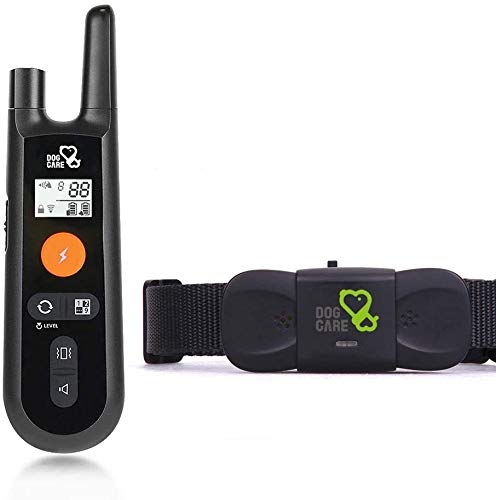
We are excited to have the chance to take a look at the #1 Best Selling dog shock collar on Amazon. This Dog Care Rechargeable Dog Shock Collar has thousands of positive customer reviews because it has three different training modes and a maximum remote range of 1,000 feet. There is an adjustable static level that can be adjusted for all dogs between the sizes of 15 pounds and 100 pounds.
A rechargeable battery is integrated, and this battery is designed to last significantly longer than many of the rival products within this industry. Customers will have to factor in several different details, including the fact that this product has an exceptional reputation. The reasonable price range is also a major factor to consider, especially since it provides so much additional control for dog owners to help train their pets.
Pros
Cons
Our second product recommendation will take an in-depth look at this remote-controlled PATPET Dog Shock Collar. This device is capable of serving as a top-tier training collar that can help keep your dog's behavior in check at all times.
The convenient remote control system can reach upwards of 1,000 feet before losing the signal. The battery life is also significantly longer than many of the alternatives on Amazon. If you are looking for a premium top-tier shock collar to help train your dogs, then you might want to strongly consider buying this PATPET Dog Shock Collar.
Pros
Cons
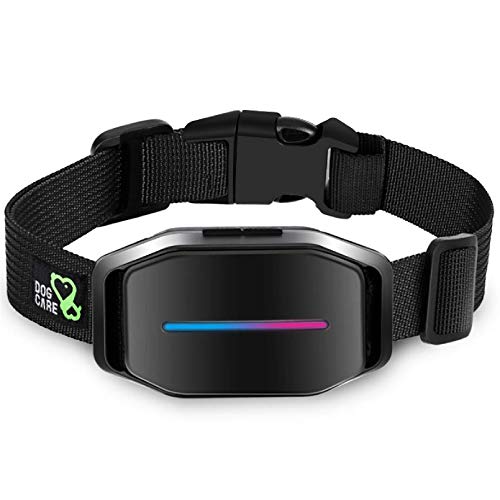
We are now shifting our focus towards the Dog Care Anti-Bark Collar. This collar outputs a shock if your dog barks. Several sensitivity modes can be adjusted to ensure that no accidental shocks take place. A long-lasting battery is integrated into the design of this collar, and a convenient battery indicator is also visible on the collar.
This Dog Care Anti-Bark Collar is also extremely cost-effective, especially since it currently clocks in as one of the cheaper product options within this review. If you are looking to purchase a dog training collar, then you might be interested in this convenient and popular Anti-Bark Collar from Dog Care.
Pros
Cons
Some customers might be interested in this high-quality FunniPets Dog Training Shock Collar. This device is integrated with four separate training modes, and it also is completely designed to be waterproof. The remote range is capable of reaching upwards of 2,500 feet to ensure that you are always capable of training your dog.
Several safety features have been integrated to prevent accidental shocks. A built-in LED light has also been inserted into the collar to help you to find your dog at night in darker conditions. This is one of the higher-priced shock collars on Amazon, but it certainly has some premium design features that might justify the higher price point.
Pros
Cons
We have finally reached our fifth and final item for this review. The Petrainer Shock Collar for Dogs is considered to be one of the expert dog training collars that are currently available for purchase. Most of the customer feedback is positive, and this collar can be adjusted for dogs of all sizes.
The waterproof design is extremely convenient, and that feature certainly contributes to the long-lasting reliability of the design. There are several sensitivity options also available to help you to effectively configure your shock collar to your preferred disciplinary settings.
Pros
Cons
Frequently Asked Questions
Can you train a dog with a shock collar?
As we mentioned in the introduction section of this post, a shock collar can have different effects on different types of dog breeds. Some dog breeds are more receptive to shock collars, and some dog tends to learn quickly.
Unfortunately, some dog breeds react negatively, so it can certainly be challenging to understand whether a dog shock collar is worth it for your dog. The good news is that we have presented you with five solid product choices that are proven to be safe and effective for training purposes. These dog shock collars are the most likely to effectively train your dog.
How do shock collars work?The first shock collars for canines were introduced in the 1960s. At the time, the designs were fairly simple and crude. You held down a button to deliver a shock to the dog. There wasn't any variance in the intensity, and there weren't any automatic failsafes.
Since then, shock collars have come a long way. The designs have been refined to make them more effective for training pets in different ways.
It's important to understand that shock collars are aversive training. Aversive training teaches your dog not to repeat a behavior because the result is uncomfortable. Most people use shock collars to curb unwanted, stubborn, and unsafe behaviors in dogs.
A shock collar is a training tool, not a punishment. The design isn't meant to punish your dog for unwanted behavior. Instead, it teaches your dog not to repeat that behavior in the future. To do this, it delivers a shock when your dog engages in the unwanted behavior, so your dog associates the behavior with discomfort.
This means that you have to be committed to the training. You should never shock your dog out of anger, and you should always use the collar as a teaching device. If your dog can't learn from the experience, then it hasn't been productive.
Unlike the first shock collars pioneered half a century ago, many of today's shock collars are automatic. This means that you don't have to watch for an unwanted behavior and then press a button. Because they're automatic, your dog is much more likely to develop a rapid connection between the unwanted behavior and the shock.
Some examples of the ways that collars respond include:
- An anti-barking collar administers a shock when your dog's vocal cords move
- A remote control allows you to manually administer shocks for unwanted behaviors like leash aggression or food aggression
- A wireless device notifies the collar if the dog has left its appropriate area, causing a shock similar to a very mild electric fence
Some breeds respond better to shock collar training than others. If your dog is responsive to shock collars, training sessions can often be a good way to improve the bond between man and dog.
How can I keep a shock collar from harming my dog?
It's important to look for shock collars that have been tested and approved before going on the market. These tend to be safe to use on your dog. Though they might sting your dog for a moment, they don't have the capacity to do lasting damage.
Some owners are concerned about psychological harm to their dogs in addition to physical. Shock collars have garnered controversy in the dog world. Many experts agree that they can be effective training tools when used properly. But if your dog is unduly upset by the collar, you might want to look into other training methods.
The majority of shock collars have several enforcement levels. You're not delivering sudden, agonizing pain to your dog because of an accidental misstep. Instead, the collar starts out at a low level of mild discomfort, and the shocks become more difficult to ignore if the dog repeats the behavior.
You might not want to shock your dog for behavior they haven't learned is wrong. That's completely fair! Most dog owners feel the same way. Because of this, there are many shock collar models on the market that vibrate or beep loudly as a warning before delivering any pain. You don't have to worry that your dog will be unfairly hurt.
What are the different types of training collars?
Different types of training collars are designed for different purposes. Before you select a collar for your dog, you should have a sense of what you'll use it for. Today's market can be broken down into seven main categories.
Pinch and prong collars are used for certain types of obedience training, especially when out on walks. Some of the purposes the collar serves include:
- Teaching your dog not to yank on their leash
- Teaching your dog to heel when told
- Teaching your dog to ignore distractions
- Teaching your dog not to chew on items on the ground
A pinch collar doesn't have a shock function. Instead, it has prongs that dig lightly into your dog's neck when they pull against their leash. This is a very simple way of teaching your dog to behave on walks.
Choke collars are also used for leash training. They serve many similar purposes to pinch collars. But it's important to note that choke collars are best for aggressive dogs, since the dog may need to be incapacitated at a moment's notice. If they're used on breeds with fragile or small necks, they can pose a health hazard.
Martingale collars serve the same purposes as choke collars, and they also work well for aggressive breeds. Some experts consider them safer, since they're made of fabric rather than metal. A dog has less likelihood of choking with a martingale collar than a traditional choke collar.
Anti-bark collars are exactly what the name implies. They keep your dog from barking at everything. For people who live in busy neighborhoods or who have high-strung dogs, a break from the barking can be a blessing. Anti-bark collars come in three categories:
- Sonic
- Shock
- Citronella
Invisible fence collars are used to keep dogs within their boundaries. As a dog approaches the boundary of their yard, the collar will warn or shock them. This can be an important safety training tool, especially if your dog often wanders in an unfenced yard.
Some dogs also enjoy climbing the fences around their property. Many dog owners have found that an invisible fence collar helps to deter this behavior.
Remote training collars are shock collars that are used for training purposes. Not all of them use electricity as their sole means of stimulation, though. Some designs use a chime, static, or vibration to respond to a dog's behavior.
What are the differences between static, citronella, and sonic collars?
All of these collars are used as anti-barking mechanisms. They respond to movements of your dog's vocal cords. But they are designed in somewhat different ways, and the right one for you may depend on your dog's breed.
The similarities should be noted first. Every one of these collars is structured like a traditional nylon dog collar. But at the front, a mechanism senses movement of your dog's vocal cords and responds.
Static shock collars use static electricity. The charge moves through the two prongs touching the dog's neck. Many of these collars start out with small shocks, but they become more intense if your dog keeps barking. Experts recommend testing the collar against your hand if you're anxious about the intensity.
Citronella collars don't use electricity. Instead, they deter a dog's behavior through scent. When the mechanism detects unwanted barking, it releases citronella into the air. Dogs find the smell of citronella highly unpleasant, and they don't tend to bark after this.
Sonic and ultrasonic collars use sound as a deterrent. An unpleasant, high-pitched sound will occur if your dog barks. The sound will generally not be audible to human ears, but dogs find it very grating.
How do I make sure I get a collar that fits my dog?
As with any collar, you want a design that's suited to your breed and sized for your dog's neck. You can often ask your veterinarian to take a collar measurement for you, since they're more familiar with the process.
If you use a shock collar, it is important to pick one that's suited to your dog's size and breed. Most shock collars come in ranges of either low-to-medium or low-to-high. The medium-ranged designs are for dogs who are too sensitive for intense shocks, while the high-ranged designs are for more stubborn dogs.
A larger dog will usually need a collar with a higher output, since they have more body mass. The higher output allows the collar to have the same effectiveness that a lower output has on a smaller breed. But there are some small dogs that end up needing surprisingly strong collars.
What does a collar's "range of effectiveness" indicate?
Most shock collars function by connecting the collar to a remote device. This device can be used to either manually administer shocks or to run an automatic program. The range of effectiveness refers to how far the collar can stray from the remote before the connection is lost.
How far is your dog allowed to move? If you use a boundary collar, the range of effectiveness might be limited to the perimeter of your yard. If you train your dog while you're out together, it's common for collars to have a range of anywhere from half a mile to a full mile.
There isn't any consequence to a collar with a wide range, especially when you're out with your dog. The bigger the range, the more control you have over your canine pal. But if your collar doesn't have enough range, you might lose control when your dog wanders outside the boundary.
Why are reliability and speed such important factors with a training collar?
Dog training teaches dogs to repeat positive behaviors and stop doing negative ones. But if a dog is to learn that a behavior is "bad" or "good," they need to be rewarded or disciplined immediately. It's vital that the dog recognizes that the stimulation from their collar accompanies a specific behavior.
With automatic protocols like anti-barking measurements, the shock is delivered instantly. With remote controls that deliver manual shocks, it's important that the collar picks up the transmission as soon as you send it. The faster your wireless connection, the faster the response time.
An unreliable connection can pose a serious problem when you're training a dog. If the training isn't consistent, providing the same response to the same behavior every time, then your dog won't develop the association. Many cheap collars have unstable connections that can impede training.
What features should an ideal dog shock collar have?
Ultimately, the most important thing about a shock collar is that it works for you. It should be designed for your specific goals, and it should fit your specific breed.
Once you've gotten these specifications out of the way, you can look for additional features including:
- Non-painful stimulation like vibrations and tones to warn your dog prior to a shock
- Stimulation powerful enough to suit your dog's temperament
- Adjustable levels of stimulation
- A wireless connectivity range of at least a half mile
- A fast wireless connection between the remote control and the collar
- Durable materials proven to last for a long time
- A solid manufacturer's warranty
Shopping for a collar becomes a lot easier if you use these features as a guideline or a checklist.
What are the biggest advantages of using a shock collar?
As mentioned, today's shock collars are far more advanced and effective than the crude tools used in the 1960s. There are a variety of advantages to the design.
One advantage is that the majority of today's shock collars have adjustable levels of intensity. They also tend to have warning signs before they administer a shock. That means that if your dog engages in unwanted behavior, they have a chance to stop before any pain ensues.
The adjustability tends to be unique to shock collars. Scent-based collars that spray unpleasant smells into your dog's nose don't tend to have adjustable levels. Some sound-based collars have adjustable frequencies, but a lot of them don't.
Shock collars also offer fast results when used for training. Positive reinforcement and distraction alone are great, but they're also not very effective at curbing unwanted behaviors. With positive reinforcement, a dog may take months to break a bad habit. With a shock collar, it tends to take only a few administrations.
Many owners say that they haven't even needed the shock when training their dogs. The vibration or loud beep was enough to deter the dog from repeating the behavior.
Boundary collars also give fast results. It can be stressful to figure out how to fence your dog in, especially if you have an adventurous breed that likes causing trouble. By imposing a boundary, you ensure that your dog stays close to home. This allows them freedom while being a lifesaving measure.
If you use an anti-bark collar, the mechanism happens automatically. You don't have to push a button yourself. You don't even need to be home when your dog barks. This makes these collars appealing to people who have neighbors that complain about their dog's noise.
A final advantage of a shock collar is that it's often an affordable tool. Dog training courses and one-on-one trainers can cost thousands of dollars. The same is true of heavy-duty fences and other boundary constructions. By contrast, a training collar is affordable and highly effective.
What are some of the potential drawbacks of dog shock collars?
There are some disadvantages to using dog shock collars. But it's important to note that most of these disadvantages are when the collar is used alone. Expert dog trainers recommend using a combination of positive and negative reinforcement in training, rather than all positive or all negative stimulation.
The biggest drawback is often the shock itself. It can be hard to imagine causing your dog pain. Because of this, some people only use shock collars to deter unsafe or aggressive behavior. Other people use the collars more liberally, but they have a very hands-on and involved approach to training.
If your dog becomes afraid of the shock, that can lead to a dangerous situation. When shock training is used incorrectly, dogs might develop a fear of certain objects, people, or places.
Some dog owners also notice a tendency for the collars to over-correct a dog's behavior. This is particularly common in anti-bark collars, which work automatically. If a collar detects a bark when your dog didn't actually bark, it might deliver an unnecessary shock. Not only is this unfair to your dog, it can impede training.
And the final potential disadvantage is that shock collars are just one type of training. Dogs need positive reinforcement and rewards when their behavior is good. Shock collars don't provide positive reinforcement. They exist solely to stop negative behavior.
Because of this, it's important that your dog's training also includes positive rewards. When your dog obeys a command, patiently sits, or otherwise behaves in a desired fashion, you should offer a reward.
The most common rewards when training a dog are extra playtime, a small dog treat, or extra human affection and approval.
Final Verdict
Dog owners are always looking for new ways to train their beloved dogs. One way that you can do that is to purchase an effective dog shock collar that simply provides a little bit of electrical shock to prevent dogs from barking or acting poorly.
These products all have a positive customer reputation for effectively training dogs. They are also reliable, and some of them even have convenient features like long-term battery life and waterproof collar designs.
Don't forget to visit the product pages and view our list of pros and cons for each product. This information will certainly play a role in helping you to make a smart purchase decision for your dog.


